The Useful Pause at the Top of a Hill
Why stopping for ten quiet minutes can change the way a familiar landscape looks — and the way you remember it.
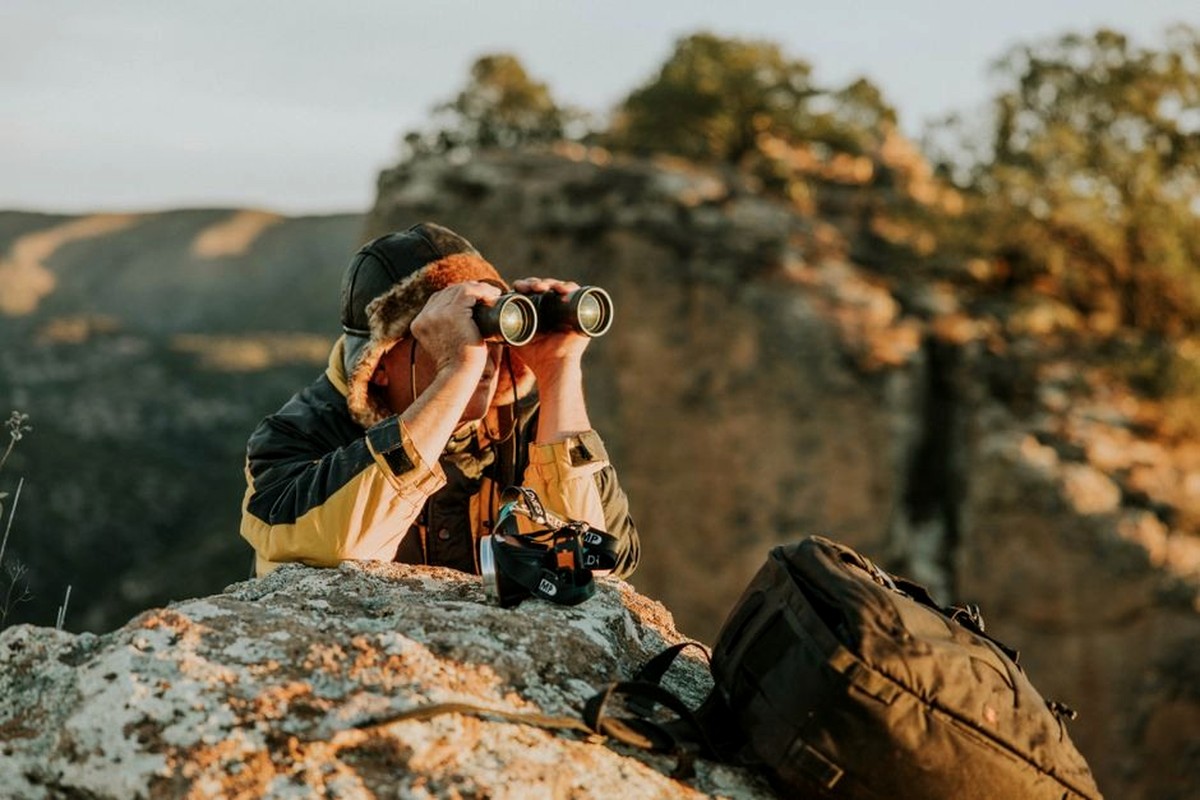
A hill does not have to be dramatic to earn a pause. It can be the low ridge at the edge of town, the last rise on a woodland path, or a rocky overlook reached after an ordinary hour of walking. What matters is the change in viewpoint. A little height slows the eye down.
Most walks are built around movement. We notice the next bend, the next gate, the next patch of shade. At a viewpoint, that forward rhythm briefly disappears. The landscape becomes less like a route and more like a picture with layers: foreground stone, a strip of trees, roofs in the middle distance, then sky.
Let the first minute be empty
The temptation is to reach immediately for a camera, binoculars or phone. Try waiting instead. The first minute is often when the obvious features dominate: the tallest tree, the brightest roof, the broadest sweep of countryside. After a little longer, smaller things begin to register — birds crossing at different heights, shadows moving over fields, a path you did not notice while climbing.
This is also a useful way to photograph a place. Rather than collecting ten quick frames, choose one question. Where is the light strongest? Which line leads the eye through the scene? What changes if you step three metres to the side? A short period of looking usually produces fewer pictures and better ones.
Use tools as extensions of attention
Binoculars are especially good at turning a wide view into a sequence of small discoveries. A distant church roof becomes a piece of architecture; a pale patch on a hillside becomes sheep; a dark line becomes a hedgerow. A camera can do something similar, but it helps to resist treating every discovery as something that must be recorded.
One photograph, one note, or even one remembered detail is enough. The point is not to document the hill completely. It is to give the stop a shape.
Leave before the view becomes background
There is a sweet spot to a pause. Stay long enough for the scene to deepen, but not so long that it becomes furniture. Ten or fifteen minutes is often plenty. Then shoulder the bag, put the lens cap back on, and continue walking.
The small interruption changes the rest of the route. After looking carefully from above, you tend to notice more at ground level too: the texture of bark, the angle of a wall, the sound of a stream before it appears. The hill has done its work not because the view was spectacular, but because it reset your attention.