A Quiet Practice in Salting: Five Small Experiments to Sharpen Your Palate
Salt is both a historical backbone of food and a simple way to practice attention. These five small, kitchen-friendly experiments train you to notice balance, timing, and the differences between types of salt—skills that
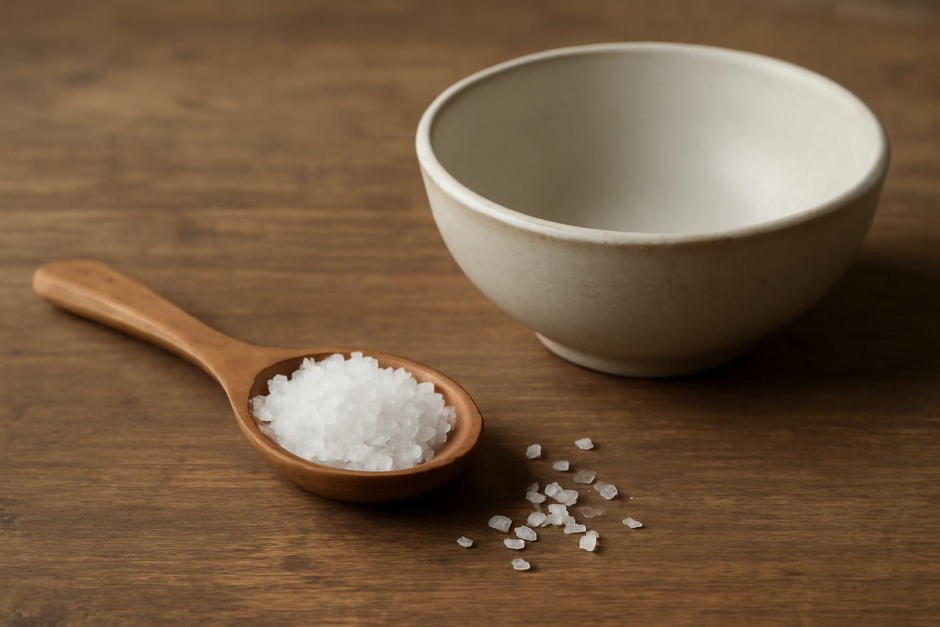
Salt looks like a small thing, but it has quietly shaped food and trade for millennia. From the salted stores of antiquity to the modern habit of finishing a dish with flaky sea salt, people have used salt not only to preserve but to clarify flavor. Practicing salting is, at its root, a practice of attention: noticing how a tiny adjustment alters texture, aroma and the overall impression of a bite.
How to use this set of experiments
Each experiment is short and meant to be done in ordinary conditions with pantry basics. Do them in sequence: each builds a slightly different part of the skill — recognition, timing, contrast, and balance. You do not need special equipment. Take notes if you like, or simply notice and repeat. Treat them as low-stakes laboratory work for everyday meals.
Experiment 1 — Taste salts side by side
Goal:
Learn to discern small differences between types and grains of salt.
- Gather three salts you might have: a fine table salt (or iodized), a coarse kosher salt, and a flaky sea salt (or any large-flake finishing salt).
- Place a small pinch of each on separate spoons or small dishes. Smell each briefly.
- Place a tiny amount on the tip of your tongue, one after the other. Wait between samples to clear your palate with plain water.
- Note differences in immediate sharpness, how long the taste lingers, and any textural sensation. Which feels brassy? Which evaporates quickly? Which gives a satisfying crunch?
Why this matters: different salts measure and dissolve differently. Knowing their character helps you choose when to dissolve salt into a pot and when to finish a roast with a flake.
Experiment 2 — The graduated potato
Goal:
Feel how incremental amounts change perception.
- Cook one medium potato plainly (boiled until tender or roasted simply with oil). Cut it into three similar pieces.
- On piece A, add no salt. On B, add a light pinch. On C, add a larger but still modest pinch.
- Taste the pieces in order: unsalted, light, heavier. Pay attention not only to saltiness, but to how the potato’s sweetness and texture are revealed.
- Repeat with a different ingredient later (steamed rice or a slice of tomato). Do you prefer a little salt or none? How does salt help other flavors show?
Experiment 3 — Salt early vs. at the end
Goal:
Understand timing: how salting early (during cooking) differs from finishing with salt.
- Make two small plain bowls of the same base — for instance, soft-cooked lentils or a simple sautéed mushroom mixture.
- In one bowl, season with a modest amount of salt early in the cooking process; in the other, add the same amount at the end, just before tasting.
- Compare texture and depth. Salt added early may integrate and change texture; salt added at the end often gives a more striking top note.
Experiment 4 — Salt against acid and fat
Goal:
Practice balancing salt with acidity and fat, two of its most useful companions.
- Prepare a small neutral base: a spoonful of plain yogurt or a small piece of bread will do.
- Make three samples: one with a little salt, one with a little acid (a squeeze of lemon or a splash of vinegar), and one with both salt and acid. Optionally add a drop of olive oil as a fourth comparison.
- Taste each and note how acid sharpens, how fat softens, and how salt ties them together. Try small adjustments: a touch more acid, a tiny extra pinch of salt.
Experiment 5 — A quick broth tune
Goal:
Bring the previous lessons together by tuning a simple liquid.
- Warm a cup of plain stock, weak tea, or simply salted water infused with a herb. Keep it warm, not boiling.
- Add a small amount of salt. Taste. Add a few drops of acid and a tiny drizzle of oil or a sliver of butter if you have it. Notice how each element shifts the perception of depth and completeness.
- Adjust slowly. Try to reach a point where the liquid feels neither flat nor overwhelmingly seasoned — only balanced by a few small decisions.
These five short experiments are less about right answers and more about building a habit of careful tasting. Over days and weeks, the small decisions become intuitive: how much salt a handful of greens needs, whether a dish benefits from a late sprinkle of flake, or when a dash of acid rescues an otherwise heavy bite. The history of salt is a reminder that tiny things can steer a meal; your attention is the instrument you sharpen with practice.
Where to go next: Repeat one experiment each time you cook for a week. Keep the changes small. Notice not only what you change, but how quickly you recognize it. That kind of steady, ordinary work is the core of making better food at home.